Why mental wellbeing is so important
May is often referred to as the “merry month.” There’s something to be said for that because when it’s finally warmer again after the long, gray winter, the days are longer, and nature blossoms are everywhere, it’s simply good for your well-being. Hardly anyone can escape the magic of this month, as it stands for new beginnings and fertility unlike any other time of the year. May is not only good for flora and fauna, but also good for the soul. So it’s no coincidence that May has been chosen as the international “Mental Health Awareness Month.”

But, of course, we should not only take care of our mental well-being in May, but also in the remaining eleven months of the year. The increasing number of mental illnesses in our society shows just how important this is. Currently, it is estimated that around 18 million people in Germany suffer from a mental illness. This topic, which used to be rather taboo, has increasingly become the focus of public attention in recent years. The more those affected dare to talk about their mental suffering, the more unveiled the state of mind of modern society becomes, revealing a state often characterized by stress and exhaustion.



One of the great issues of our time
This is not only to do with possible personal dispositions, but also with the life we lead, or believe we must lead, in the achievement-oriented society of the 21st century. Our thoroughly digitalized and synchronized world not only offers many opportunities, but also demands a lot from us. Those who are always online, always reachable, globally networked, and exposed to international competition run the risk of overexerting themselves and burning out. The “anything is possible” euphoria of the digital startup generation contrasts with an increasing number of mental illnesses. That is why not only physical but also mental health is one of the major issues of our time – not just in May!

Find the best images on the topic “mental health” right here!
Mental illness is not only primarily a struggle for the individual as well as his or her relatives, but it is also becoming a problem for society as a whole and for the national economy. Absenteeism due to mental illness in German companies has risen sharply in recent years. This causes great economic damage, in addition to the high costs incurred by the healthcare system and the solidarity society due to the necessary medical treatment.


Today mental anguish is no longer taboo
Not only sober economic considerations, but also a gradual change in social values has led to greater sensitivity to the issue of mental health. This has been accompanied by the peeling away of the taboo surrounding mental illness. People who suffer temporarily or even for a longer time no longer have to fear being dismissed as “crazy.” On the contrary, if they come forward, they are more likely to find acceptance and compassion. And sometimes they will also be surprised – and a little relieved – to find out what good company they are in with their problem.

So today, there are more people willing to admit their unhappiness and seek competent help than there were just a few years ago. The long waiting lists in psychotherapy practices or psychosomatic clinics, for example, are visible evidence of this trend. The buzzword “burnout” describes (and sometimes conceals) a complex and serious medical symptomatology that manifests in deep mental and often physical exhaustion. It not only affects people who suffer from a tyrannical boss or a mix of unfavorable life circumstances, but often also the committed, (over)motivated, and professionally successful.
However, corresponding studies also show that, in addition to the general side effects of modern life, other burdens have darkened the minds of many people over the past two years. The Covid-19 pandemic was not only a challenge for the healthcare system, society, and the economy, but also a psychological tour de force for many people. Hardly halfway through one crisis was replaced by another: fear of war and economic recession. But even – and especially! – when the world around us sometimes gives little cause for optimism or even joy, we should remember that life is not gray but colorful and has much to offer.
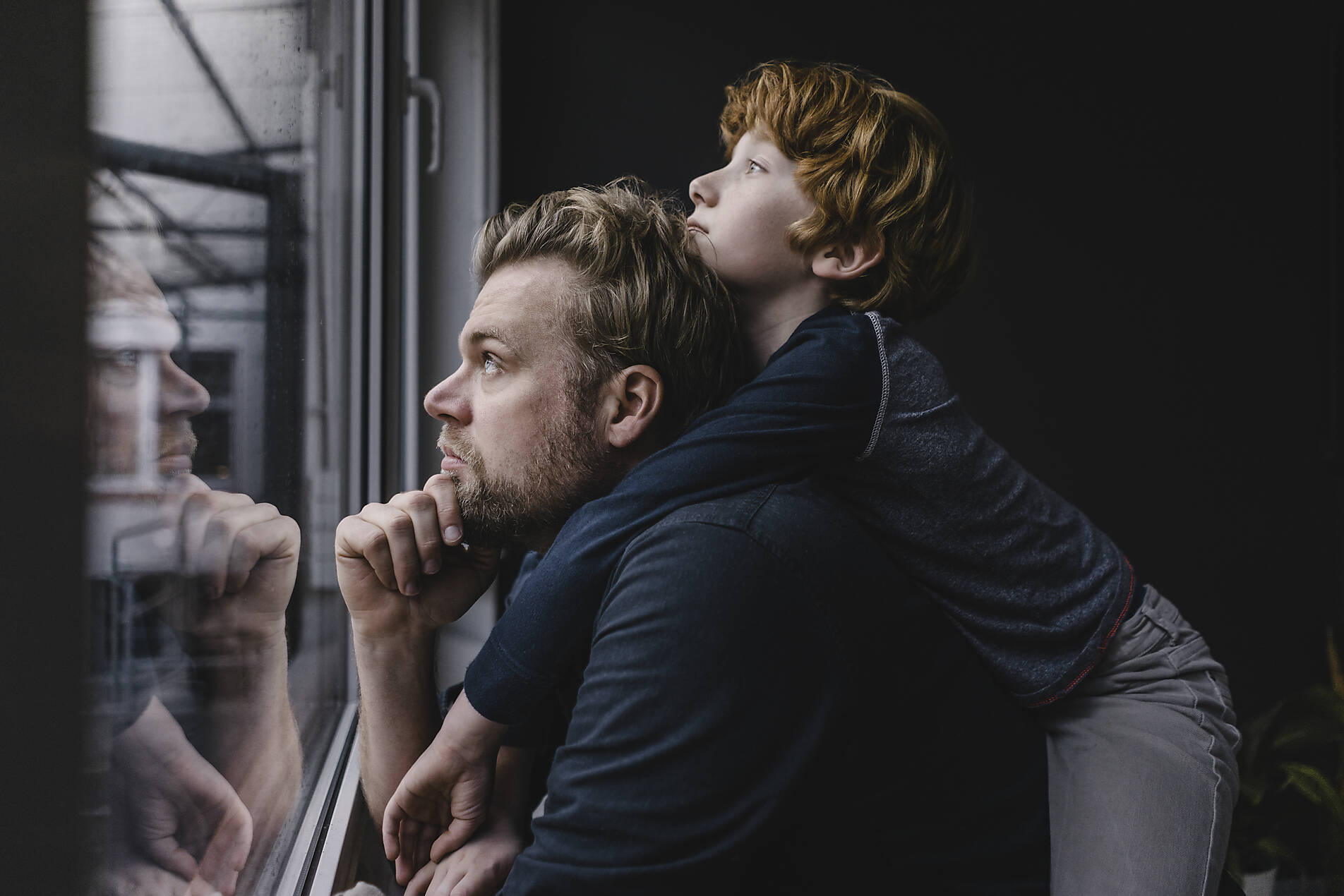

Important for advertising and stock photography
That’s why the mind and soul also need to be nurtured if we want to reduce stress, draw new strength, and ultimately prevent burnout. This trend toward mindfulness and managing one’s own strengths promotes a need for spirituality and deceleration in many people. There are many paths that can lead to this goal. For some, it is a walk through the forest; for others, a journey inward by means of meditative immersion or other relaxation techniques.

In the spheres of “mindfulness,” “deceleration,” and general “mental health,” a large market of health offers has emerged. It can be assumed that this sector will continue to grow more important in the coming years. This makes the topic of “Mental Health” an increasingly relevant business field for advertising – and for (stock) photography.
After all, mental well-being is an existential core area of our lives and accordingly and strongly linked to emotions. And, of course, we primarily mean positive emotions here. Mental health is more than just the absence of gloomy clouds over our spiritual landscape; it is a basic mood of positive serenity with the willingness to not overlook – and to enjoy – the beauty of life alongside all the ugliness. As a small effective exercise for this, we strongly recommend a trip to our Lightbox – May feelings guaranteed!